

REimagining Real Estate

(BS Finance ’05, MRED ’07)
From graduate to groundbreaker
Tanner’s path to reshaping the U.S. housing market began in the classrooms of W. P. Carey. As a finance major and later a student in the Master of Real Estate Development program, he immersed himself in the mechanics of capital markets, development strategy, and community impact.
“W. P. Carey’s MRED program put principle into practice for me,” Tanner says. “It helped me understand capital allocation and different types of development — and it introduced me to people who have been a lifelong blessing. That foundation played a big role in building Invitation Homes.”
Now, W. P. Carey is building on that same foundation to prepare the next generation of real estate leaders.
Expanding real estate education
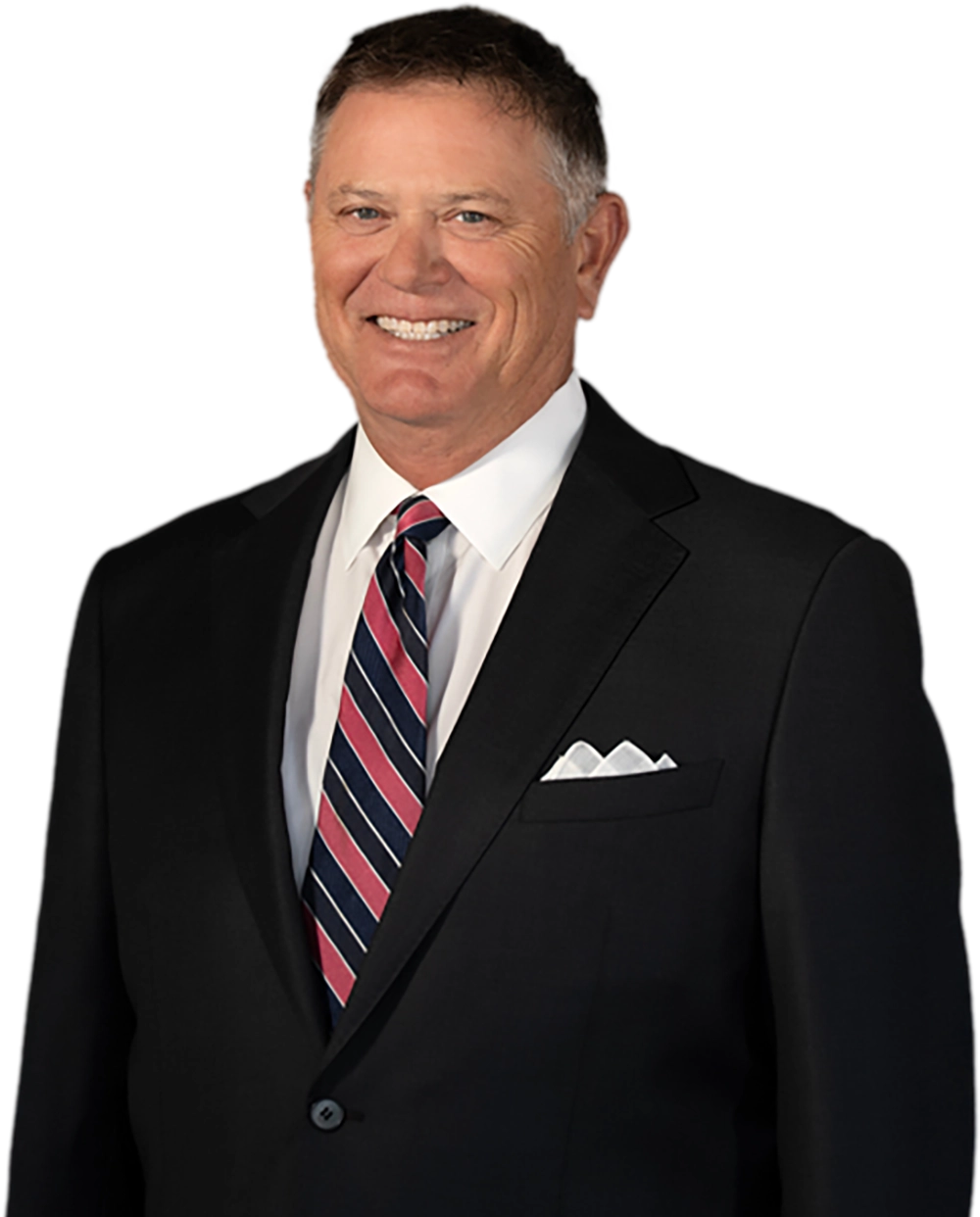
Executive Director of the W. P. Carey Center for Real Estate and Finance
“We knew we needed an executive with extensive and varied expertise to build strong relationships across the many sectors within and related to real estate,” says Laura Lindsey, the Cutler Family Endowed Professor, chair of the Department of Finance, and associate professor of finance. “TJ has the practical experience necessary to deliver on the vision for the center.”
The gift also endows a W. P. Carey Distiguished Chair to serve as the center’s academic director. The new chaired professorship, which the school is actively recruiting for, will expand the academic profile of W. P. Carey. “The W. P. Carey Distinguished Chair position is key to our ability to attract preeminent faculty to ASU,” says Gopalakrishnan Mohan, senior associate dean of faculty, school director, and professor of supply chain management. “Undoubtedly, with the W. P. Carey Foundation’s support, we are better positioned to hire an outstanding scholar to provide thought leadership in this key area.”

Cutler Family Endowed Professor, Chair of the Department of Finance, and Professor of Finance
“We won’t lead by what we teach — we’ll lead by how we teach,” says Mark Stapp, Fred E. Taylor Professor in Real Estate, executive director of the MRED program, and director of the Experiential Learning Lab. “Our graduate students already benefit from a highly experiential model. With the new bachelor’s degree, we’re scaling that approach to reach more students earlier in their academic journey.”
Arizona, and the Phoenix metro area in particular, offers an ideal setting for real estate education. As a fast-growing region, it serves as a live-learning laboratory where students can engage with all of the challenges and decisions related to real estate in real time.
“We’re creating immersive, tech-enabled environments that allow thousands of students to immerse themselves in the subject, besides listen and read about it, to teach them how to apply financial modeling and development strategy in real-world scenarios,” Stapp says. “It’s about connecting classroom learning with the lived experience of the built environment — and helping students understand not only how real estate works, but why it matters to communities. It is more than making money, it’s about how we create places and how the business impacts society.”
At W. P. Carey, students go beyond learning financial concepts or studying simplified cases; they engage with market data, analyze actual development projects, and collaborate with mentors to understand how real estate can support communities, achieve housing stability, foster economic mobility, and build long-term resilience.
“To me, a hands-on, community-first approach means preparing students not only to understand the real estate industry as it exists in textbooks, but also to be out in neighborhoods, immersed in the communities that real estate professionals are operating in,” Tanner says. “This kind of real-world experience — dealing with different communities and their members — is essential to help students develop both the technical skills and the human insight needed to be a modern-day real estate professional.”
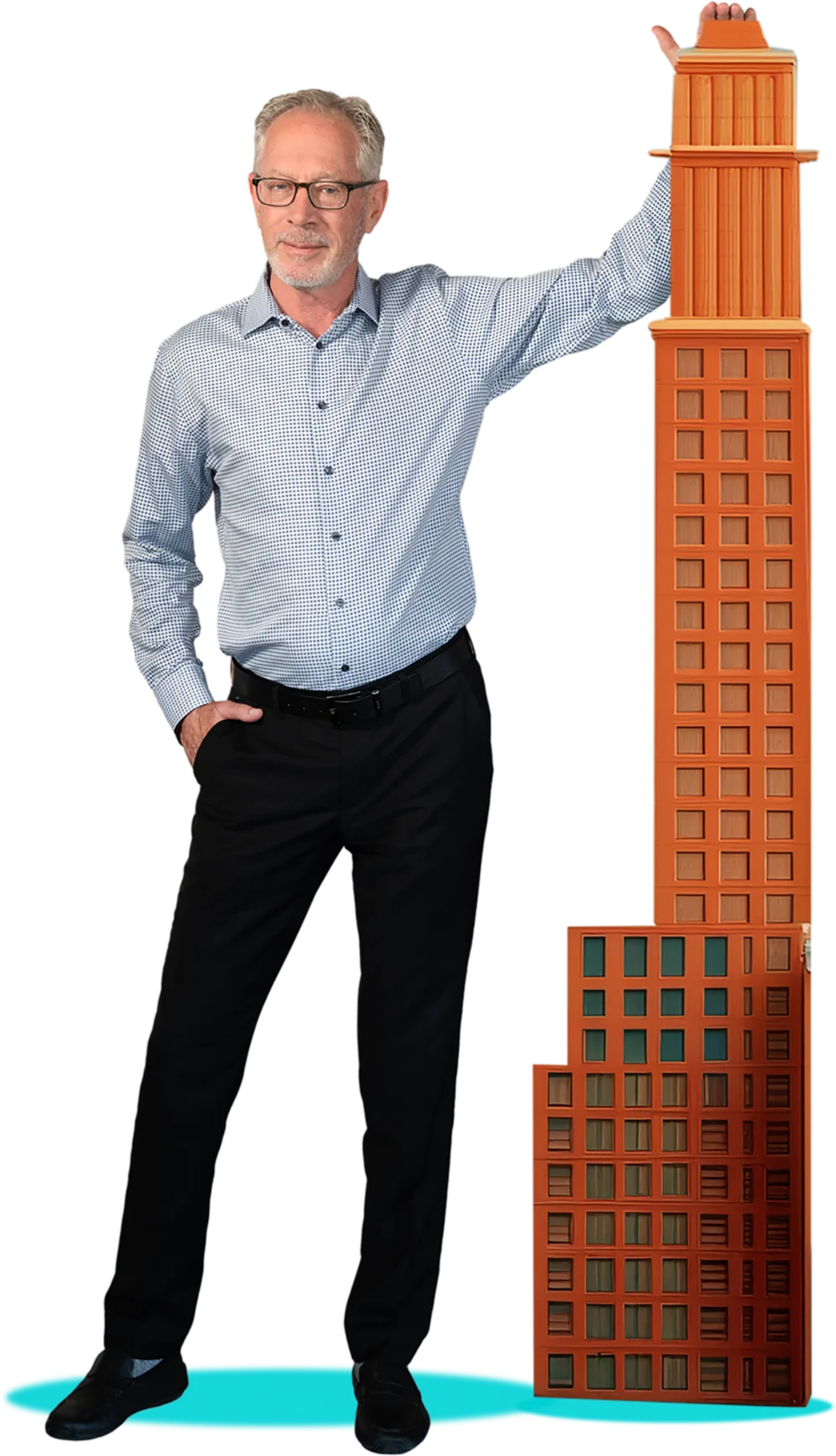
Fred E. Taylor Professor in Real Estate, Executive Director of the MRED program, and Director of the Experiential Learning Lab
She brings a personal touch to the community as well — often accompanied by her service dog, Archie, a sheepadoodle who has become a fixture at the center. Calm and approachable, Archie offers a dose of therapy during high-energy days. “He doesn’t leave my side,” Doran notes. “But he’s also quick to greet students and staff, which has been a wonderful way to create moments of connection.”
A new degree, a proven model
“Real estate accounts for more than 14% of U.S. gross domestic product — it’s a massive and vital part of our economy,” says Ohad Kadan, Charles J. Robel Dean and W. P. Carey Distinguished Chair in Business. “This new degree is just the beginning of how we’re preparing students to lead in an industry that shapes the economic and physical fabric of our communities.”
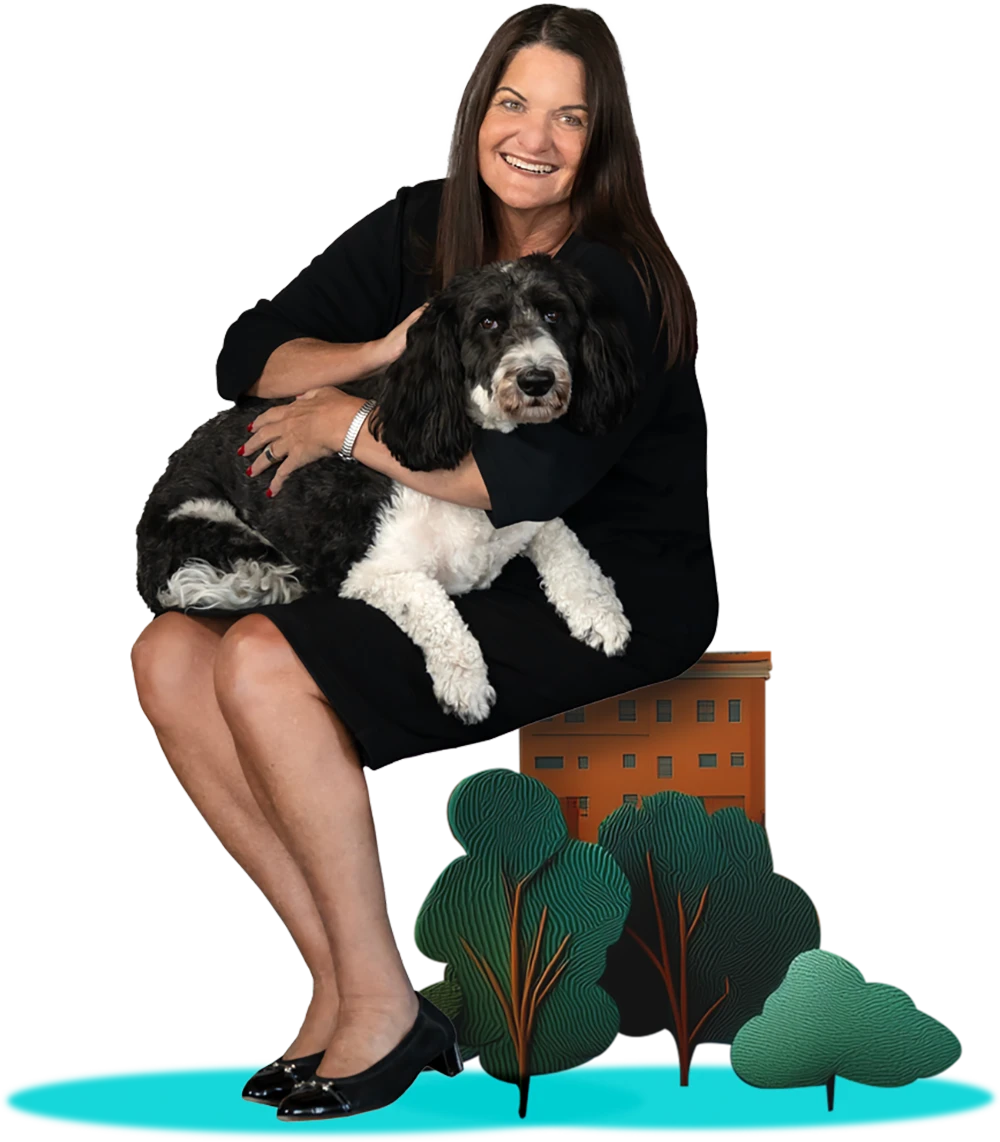
Assistant Director of Operations and Administration for Real Estate Programs (and Archie)
A collaborative foundation
This integrated approach shapes everything from the curriculum to the capstone-style synthesis projects, helping students move seamlessly from theory to application.
“These synthesis projects are where everything comes together,” Stapp says. “Our students work in teams, consult with capital partners, and defend their proposals in front of faculty and industry leaders. They’re applying business, law, design, and construction knowledge to create real, viable development plans.”
Activities of the center will help bring that same interdisciplinary perspective to the undergraduate program, which is housed in the Department of Finance.

Charles J. Robel Dean and W. P. Carey Distinguished Chair in Business
What sets the new BS in real estate and applied finance apart?
“By leveraging technology and immersive tools, we can meet students from ASU and all over the world where they are and help them absorb and apply knowledge in more effective ways,” says Stapp. “Imagine taking 1,000 students onto a rooftop or into a mechanical room or through the actual development process all at once — that’s the kind of access we’re building.”

Director of the Undergraduate Division of Real Estate and Clinical Professor of Finance
Site visits and applied coursework that prepare students for roles in investment, development, brokerage, lending, and graduate study. “Students engage in real projects with real clients — whether responding to city requests for proposals or simulating state land auctions,” Stapp says. “By the time they graduate, they will have already faced the kinds of decisions and constraints that define real-world real estate practice, fully prepared for what comes next.”
An interdisciplinary curriculum that blends real estate fundamentals with applied finance and problem-solving. “This degree connects learning with application,” says Lindsey. “By equipping students with industry-standard tools and applied experiences, we’re preparing them with the critical analytical and practical skills to contribute from day one.
“Students take the same core finance classes as finance majors, with specialized real estate courses that build on this business-forward grounding,” she explains. “Many real estate programs throughout the country are not housed in business schools and lack that emphasis, so this is already something that can expand opportunities for our students.”
These distinctive features — from immersive labs and industry mentorship to interdisciplinary coursework — are more than educational innovations. They’re investments in resilience: preparing students to think critically, build strategically, and lead collaboratively.
Where data drives collaboration
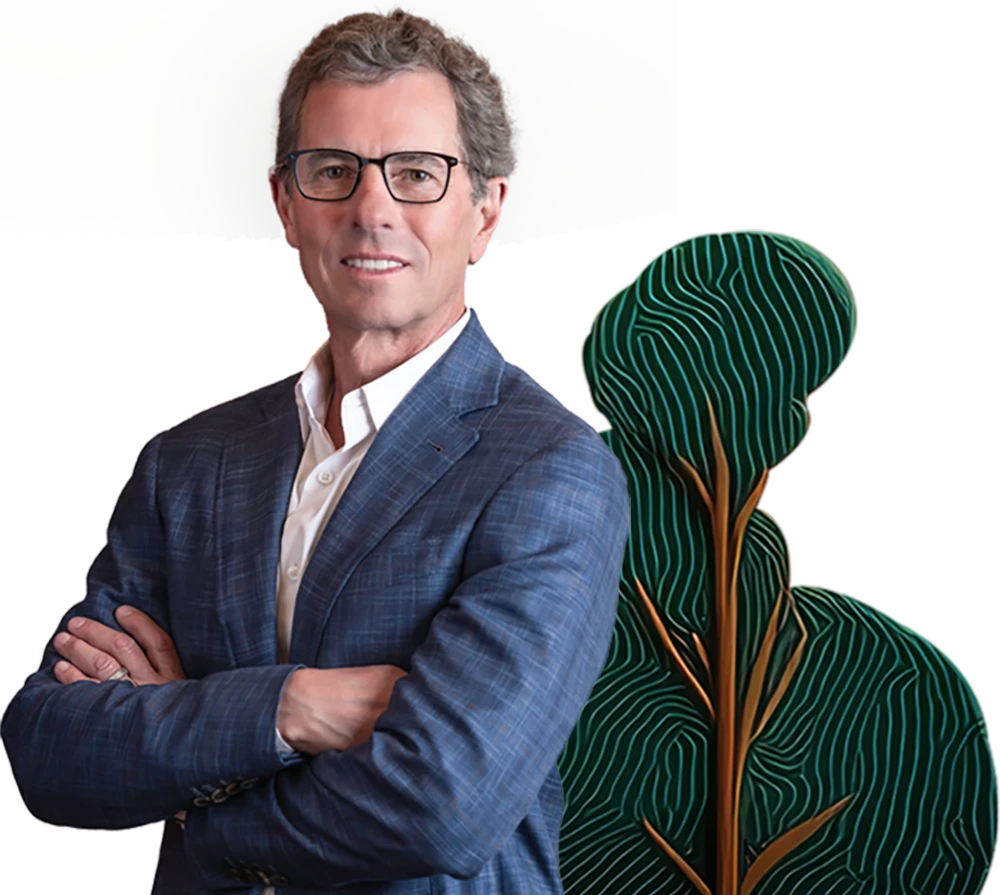
(BS Real Estate ’85) recognized by the AZ MRED Alumni Association with the 2025 ICON Award for leadership and impact in real estate
“Back in the ’80s, land-related data was extremely opaque, with nothing organized in the form of a database,” recalls Vogel, CEO of Land Advisors Organization. “Land-related decisions were made in silos, with zero collaboration or data availability. I founded Land Advisors to solve fundamental challenges — by organizing raw information in a database and creating a strategic and collaborative approach to mastering the land market for an entire region.”
His early work cataloging every piece of land in metro Phoenix was an early driver for today’s more integrated, tech-informed development practices that support the land and housing industries. “In 1983, I was building databases and using one of the first Macs to analyze apartment data,” Vogel explains. “That changed everything — and it taught me that whoever organizes and masters data while working collaboratively will win.” He went on to replicate this effort in 30 markets, building the largest land company in the United States.
Over the decades, Arizona’s economy has undergone a dramatic transformation. Land is the foundation of it all — and as industries evolve and the population grows, a comprehensive understanding of dozens of variables is essential. These variables include knowledge of infrastructure capacity and land use, as well as the constraints and opportunities that must be considered to accommodate growth, support development, and repurpose outdated uses.
W. P. Carey’s approach to real estate education embraces the responsibility of understanding these variables. Students learn to model investments and evaluate markets — and with equal weight, they examine how development decisions can advance economic mobility, support diverse housing needs, and foster long-term community resilience, and how underserved communities can control their critical assets. “Real estate plays a vital role in communities,” says Stapp. “After all, one of the top determinants of health outcomes is living conditions, which is housing.”
Shaping places with purpose

(BS Justice Studies/BA Psychology ’11, MRED ’17)
For Anna Sepic (BS Justice Studies/BA Psychology ’11, MRED ’17), “real estate is about more than what we build — it’s about the lasting impact of how we build it. Does the product make sense for the community? Is it built to a quality that will stand the test of time?”
As a broker and former multifamily owner/operator now focused on industrial and infill development, Sepic brings in-depth local expertise and strategic insight to every deal, from art-forward high-rise housing to legacy projects for adults with disabilities.
“I care deeply about the quality of real estate that comes to where I live,” she says. “When I help a client find the right property, I’m also thinking about how it contributes to the character and vibrancy of the neighborhood.”
Sepic believes legacy-building starts with quality architecture and intentional placemaking — projects that reflect the scale, culture, and values of their communities. “There’s a time and place for every product type, but development should never be about building for the sake of building,” Sepic says. “It has to be strategic and responsive to the surrounding community.” She’s also passionate about community-led change. “Development isn’t about fixing communities from the outside,” she says. “It’s about equipping people with the tools to strengthen their neighborhoods from within.” Drawing inspiration from the book When Helping Hurts, she advocates for building resilience, not dependency, and designing with long-term livability in mind — from lighting and sidewalks to schools, housing, and access to amenities.
Sepic’s experience spans diverse projects, including collaborations with refugee families and the revitalization of underserved areas. She recalls working with the police department and the county attorney’s office to reduce crime in one neighborhood, transforming it into a safer and more vibrant place for families. In another instance, she observed a homeless encampment evolve into a community hub for events and family gatherings.
Amid rapid demographic shifts — such as one area she cited, which saw a 60% population increase in just two years — Sepic says developers must understand the community they’re building for. Her work in industrial real estate, for example, is increasingly focused on smaller, more usable spaces tailored to owner-users rather than just institutional investors.
As she looks to the next generation, Sepic hopes W. P. Carey will equip the next generation of real estate professionals to lead with both business discipline and human insight. “We need to teach students how to balance strategy with empathy,” she says. “Yes, understand the market. But also understand what makes a neighborhood healthy, safe, and resilient.”
Opening doors, leading forward

(MRED ’11)
“When I enrolled in the MRED program in 2010, I had been a commercial real estate broker since 2006, and was looking to expand my industry knowledge,” she says. “I wanted to clarify my professional path and find a way to differentiate myself from my peers.”
At the time, the real estate market experienced a significant decline. Robnett saw the downturn not as a setback, but as a signal. “I realized that achieving long-term success in commercial real estate would require a commitment to personal growth,” she says. “So, it was then, in the midst of the market collapse, that I made a strategic decision to enroll and execute a plan for career advancement.”
What she found was precisely what she needed: a curriculum rooted in law, construction, business, and design — and grounded in application, not just theory. “The synthesis projects equipped me with the ability to think like a developer, planning the entire project with the pro forma, from concept to completion,” she says. “Earning my MRED from ASU was a key differentiator that led Walmart corporate headquarters to select me for its real estate division.”
At Walmart, which ranks No. 1 on the Fortune 500, Robnett assisted with site selection for new store development. Within her portfolio, she sold excess land and managed a portfolio of assets valued at over $8 billion, encompassing more than 44 million square feet nationwide. Today, she applies the same skills for her corporate clients at Greenwood CRE.
“Everything I gained from the MRED program became essential in my role in corporate real estate, and even now for my national and smaller clients,” she says. “From pro forma development to design and law — I continue to use the financial analysis tools, planning strategies for developing the built environment, and legal review techniques that we learned and applied in class.”
The evolution of technology in the field energizes Robnett. “It’s been exciting to see corporations embrace and integrate more technology into their real estate strategy,” she says. “At Greenwood CRE, we currently use advanced mapping tools and AI-based software to help clients strategize effectively, stay ahead of market trends, and maintain a competitive edge. I’m eager to see how the MRED program will also leverage technology to advance its mission.”
 ASU is positioning itself to rise to the top. Interest in finance- and real estate-related degrees is higher than ever. Many may not even realize it, but MRED graduates are exempt from specific CCIM core courses due to the rigorous curriculum, allowing them to fast-track their
As ASU expands access to high-impact learning through its new bachelor’s degree in real estate and applied finance, Robnett sees an opportunity to reach even more future leaders. “This is the right move,” she says. “With these additions, ASU is positioning itself to rise to the top. Interest in finance- and real estate-related degrees is higher than ever. Many may not even realize it, but MRED graduates are exempt from specific CCIM core courses due to the rigorous curriculum, allowing them to fast-track their designation. MRED truly grooms tomorrow’s commercial real estate leaders.
“As an MRED graduate, a CCIM designee, one of the first African American female CCIM instructors, and a 20-year CRE veteran, I make it my duty to pave the way for others,” she says. “In this industry, I intend to be the female role model that I didn’t have and strive to positively impact the next wave of real estate professionals. I not only open the door for others, but my desire is to walk them through it. To me, that exemplifies true leadership.”
Legacies under construction
So, as industries evolve and cities expand, the question isn’t whether real estate will shape the future, but who will shape real estate. At W. P. Carey, the answer is clear: a new generation of leaders ready to think boldly, act strategically, and leave a lasting mark on the places we call home.
Watch: Building leaders in real estate development
Learn more: wpcarey.asu.edu/masters-programs/mred
Advising on the future
of real estate
“We bring the industry into the classroom and we bring our students to the industry itself,” explains Mark Stapp, Fred E. Taylor Professor in Real Estate, executive director of the MRED program, and director of the Experiential Learning Lab. “This highly engaged relationship gives our students a better understanding of what industry expects — and shows the industry what our students are capable of.”
W. P. Carey’s approach emphasizes applied learning and collaboration. Instead of relying solely on case studies, students refine their communication, teamwork, and analytical skills through real-world projects that reflect market demands and expectations. The result is an immersive, forward-looking education model aligned with ASU’s Changing Futures campaign and its empower community resilience pillar.
Technology plays a critical role in this transformation. Stapp describes how the Experiential Learning Lab bridges theory and practice by enabling students to explore development strategies in realistic simulations. “The lab is going to change how we teach — not necessarily what — by allowing us to engage thousands of students in the space for a realistic context to their learning,” he says. “Using tools students are comfortable with makes complex ideas more accessible and memorable.”

(MRED ’17)
Harris notes that her experience in the program continues to have a lasting influence on her career development. “I have access to an entire team of experts if I need another point of view or direction as I continue to shape my career,” she says. “Mentorship helped me through steep learning curves early in my career — and still does.”
Board members offer their insights as mentors, classroom speakers, and sounding boards for research. “I’ve connected with many of the guest speakers since graduating — and now I’m doing business with them,” Harris says.
MRED alums are instrumental in providing learning and career placement opportunities for students. Harris, for example, now gives back by chairing the International Council of Shopping Centers’ CenterBuild conference, which creates pathways for students to connect with industry mentors and explore job prospects.
Advisory board members also support research by identifying knowledge gaps and fostering studies that address real-time industry questions. “Their input helps close the loop between industry and academia,” says Kimberly Winson-Geideman, director of the Division of Real Estate and clinical professor of finance. “They ensure we produce work that is grounded in practice and responsive to market needs.”
W. P. Carey benchmarks local challenges against global best practices, generating applied research that informs policy and private investment. Winson-Geideman cites housing affordability, office market shifts, energy demands in industrial development, and water availability as just a few of the dominant issues shaping Arizona’s real estate landscape.
From zoning reform and interest rate volatility to socioeconomic and environmental factors, W. P. Carey integrates emerging trends into classroom conversations, academic research, and professional outreach. “Our role is to educate not only students but also the industry, policymakers, and the public,” Winson-Geideman says.
Real estate trends
to watch
Hybrid work, climate risk, and property technology
“We have a once-in-a-generation opportunity to shape how cities function in a changing world,” says Oscar De las salas, client relationship manager at the global architecture firm Gensler and lecturer for the Master of Real Estate Development program.
He sees growing momentum behind repurposing “stranded assets” — underused office buildings — into vibrant mixed-use districts, climate-resilient commercial properties, and identity-specific urban spaces. “The future of real estate isn’t just about adapting to remote work,” says De las salas. “It’s about reimagining the workplace as part of a larger ecosystem of experience, connection, and community.”
Designing for disruption
High costs and uncertain returns have emerged as key barriers to widespread sustainable development. However, according to Parrish, the next wave of sustainable real estate may be a surprising advocate: the insurance industry.
“As certain natural disasters become more frequent, it’s going to get harder to insure assets,” she explains. “If companies stop providing insurance, people will have to shoulder the costs themselves — and that will likely motivate people to think differently about sustainability.”
Smarter, faster, and more personalized
“AI has created additional opportunities to mine data, streamline processes, and access and analyze information more quickly,” he says.
Opening doors for future leaders
SURMOUNT, which consolidated NNN Pro, STNL Advisors, and United Global Development Co. in 2025, offers real estate investors global services across brokerage, lease advisory, development, capital markets, and principal investing.
The Kunfoskys created the fund to provide students with opportunities that were not available when they were undergraduates.
“Real estate doesn’t always present itself well to potential college graduates, and typically, students don’t understand all the opportunities available,” says Glen. “We also wanted to give back to the school because of the opportunities it’s given us in our careers.”
“This is something we truly believe in — helping open doors for hard-working kids from ASU,” says Alison.
As W. P. Carey welcomed its first cohort of undergraduate real estate students this fall, the Kunfoskys were more excited than ever to support students on their professional journeys.
There is so much excitement about where the business and real estate sectors are going. It feels like we’re getting in on the ground floor of something big. It’s terrific to jump on board,” says Alison.
Glen recently opened a SURMOUNT office in Scottsdale, Arizona, near the ASU Tempe campus, where they have actively hired and employed many ASU students and alums and look forward to continuing to strengthen their relationship between the company and the school.
Long-term outlook remains strong
“Baseline market conditions are very good — driven by in-migration, natural growth, and sustained housing demand,” he says. “People want to be here.”
As industry leaders like Vogel, Coleman, and the Kunofskys help guide the next generation, W. P. Carey welcomes others to do the same. Join the W. P. Carey Real Estate Council to connect, give back, and help shape the future of real estate.